
Design basis
Specify suction pressure, gas and vapor load for normal, start-up and upset cases, molecular weight, condensability, motive conditions, cooling-water envelope and discharge backpressure.
Process Packages · ENGINEERED SCOPE
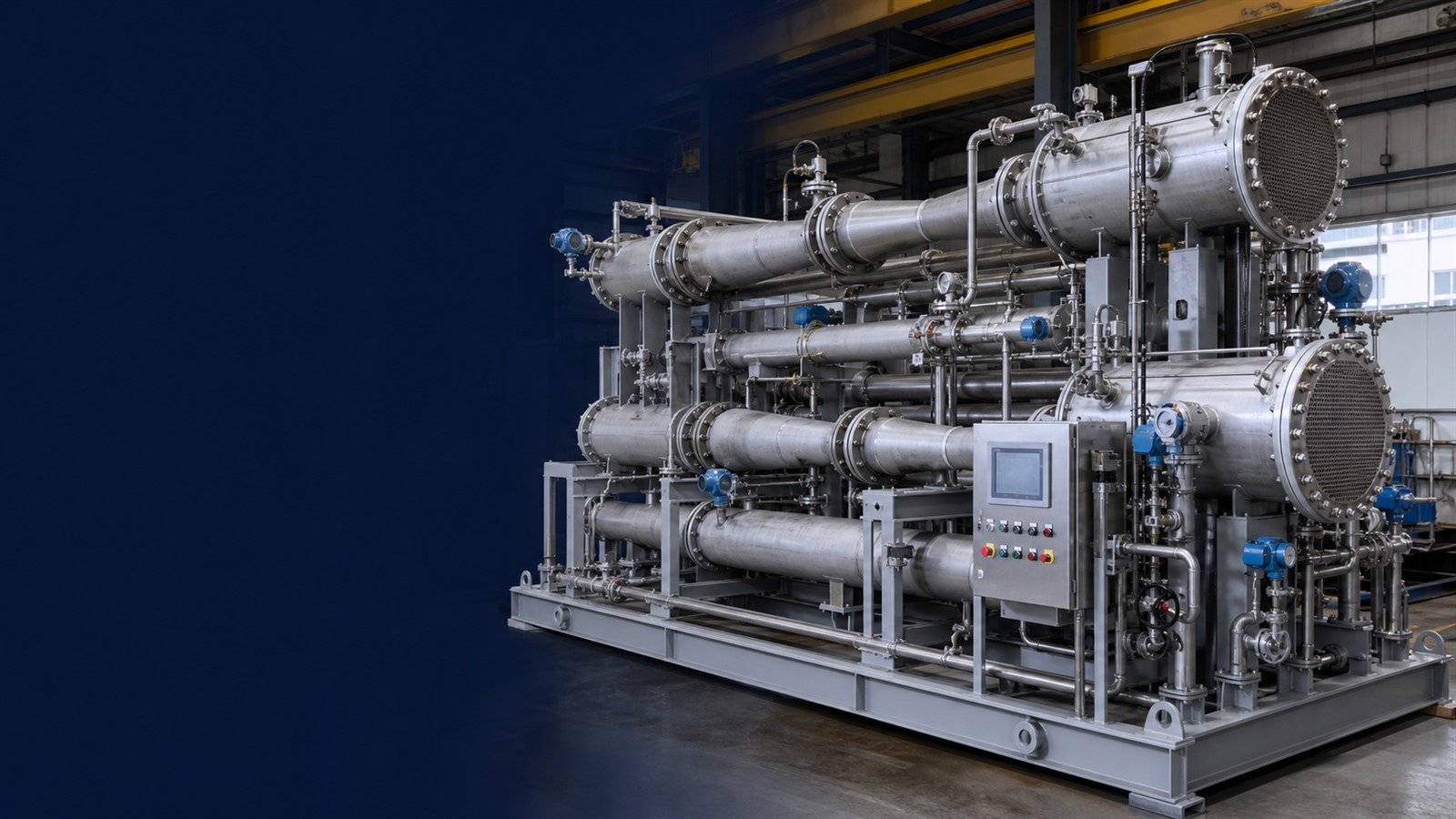
Vacuum ejector packages generate and maintain process vacuum by entraining non-condensable gases and vapors in a motive-steam or motive-gas stream. They are commonly integrated with intercondensers and aftercondensers for refinery, petrochemical and vacuum-distillation duties.
Engineering approach
A technically defined package begins with the operating envelope—not a catalogue model.
Rated capacity, minimum stable load, feed envelope, inlet and outlet conditions, product specification, start-up and shutdown cases, design life and acceptance criteria are agreed before equipment definition is frozen. Package basis also fixes battery limits, skid envelope, lifting and shipping constraints, utility tie-ins, FAT scope, preservation requirements and commissioning deliverables.
Specify suction pressure, gas and vapor load for normal, start-up and upset cases, molecular weight, condensability, motive conditions, cooling-water envelope and discharge backpressure.
Selection may use single- or multi-stage steam-jet ejectors, liquid-ring vacuum pumps or hybrid systems. Condenser type, drainage, seal arrangements, silencing and start-up evacuation are coordinated with the process system.
Performance is checked across suction-load and utility envelopes, including ejector stability, critical backpressure, condenser fouling, freeze or corrosion risk, noise, condensate handling and standby philosophy.
PROJECT DEFINITION · DELIVERY
Technical proposal quality depends on verified process data, acceptance criteria and interface definition. The following information is confirmed during clarification.
RFQ
Share the operating cases, feed data and required guarantee so the applicable process route, package boundary and verification plan can be defined.