
Design basis
Define feedwater sources, flow and temperature cases, dissolved-gas content, outlet oxygen requirement, operating pressure, storage autonomy, steam conditions, chemical dosing and boiler transient demands.
Utility Packages · ENGINEERED SCOPE
Thermal deaerator packages remove dissolved oxygen and carbon dioxide from boiler feedwater by heating water near saturation and contacting it with stripping steam. The system also provides conditioned feedwater storage and stable suction conditions for boiler-feed pumps.
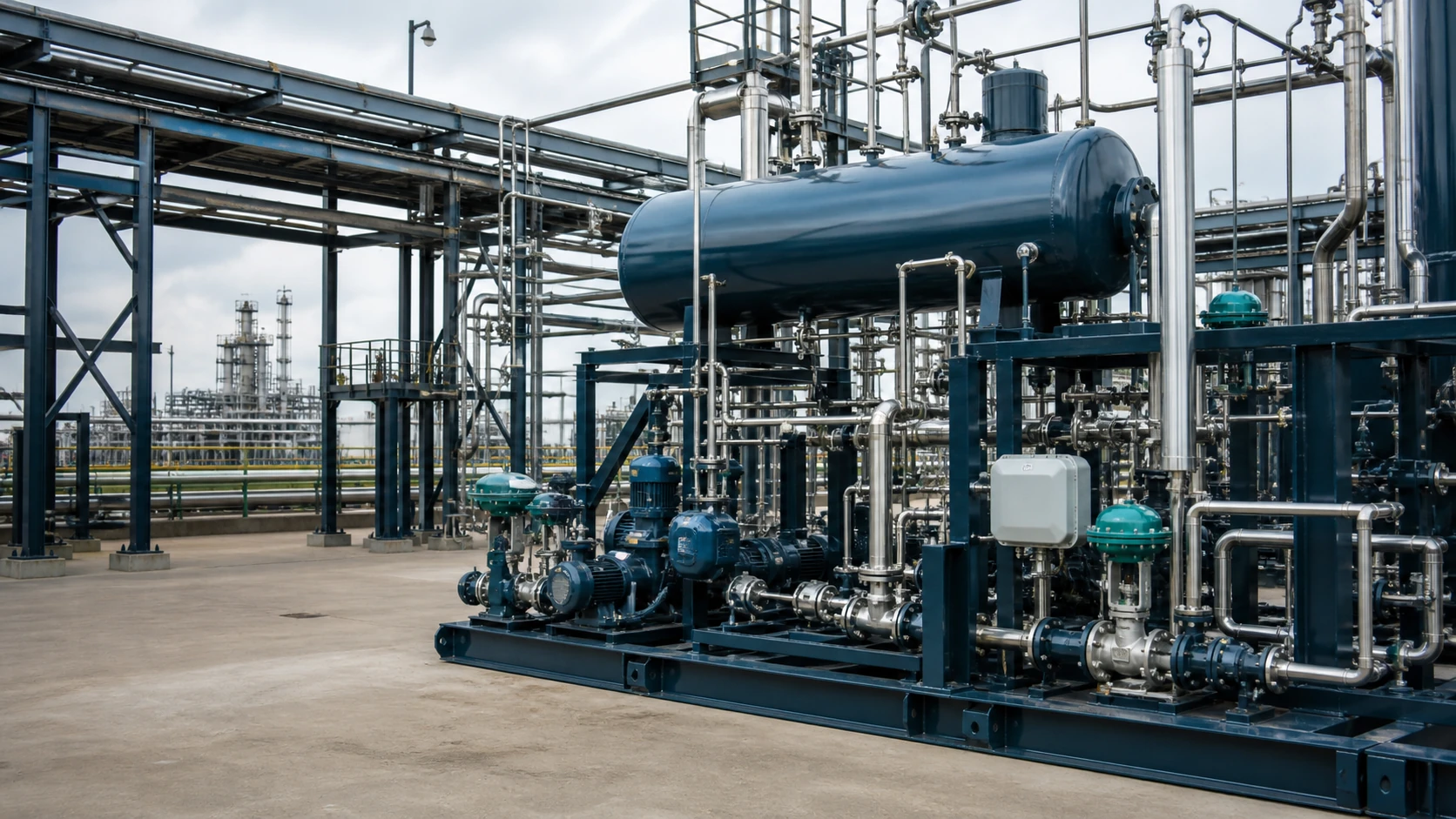
Engineering approach
A technically defined package begins with the operating envelope—not a catalogue model.
Rated capacity, minimum stable load, feed envelope, inlet and outlet conditions, product specification, start-up and shutdown cases, design life and acceptance criteria are agreed before equipment definition is frozen. Package basis also fixes battery limits, skid envelope, lifting and shipping constraints, utility tie-ins, FAT scope, preservation requirements and commissioning deliverables.
Define feedwater sources, flow and temperature cases, dissolved-gas content, outlet oxygen requirement, operating pressure, storage autonomy, steam conditions, chemical dosing and boiler transient demands.
Configuration may use spray, tray or combined contacting sections above a horizontal storage vessel, with steam control, vent condenser, overflow, level protection, recirculation and chemical-injection interfaces.
Checks include mass and heat balance, oxygen guarantee basis, steam distribution, vent rate, nozzle loads, storage volume, NPSH margin, level transients, water hammer, corrosion and start-up pegging steam.
PROJECT DEFINITION · DELIVERY
Technical proposal quality depends on verified process data, acceptance criteria and interface definition. The following information is confirmed during clarification.
RFQ
Share the operating cases, feed data and required guarantee so the applicable process route, package boundary and verification plan can be defined.
Technical Datasheet
A sourced market or engineering reference is shown below, not a code-mandated envelope, Delham rating, or project guarantee. Confirm the service basis before using it.
| Parameter | Published value | Basis / secondary data | Application limit |
|---|---|---|---|
| Mobile feedwater / deaerator-system reference | Up to 75,000 lb/h | Published capacity for a mobile feedwater/deaerator system offering. | One supplier offering; vessel design pressure, dissolved-oxygen target and actual feed load remain project-specific. |